

Context
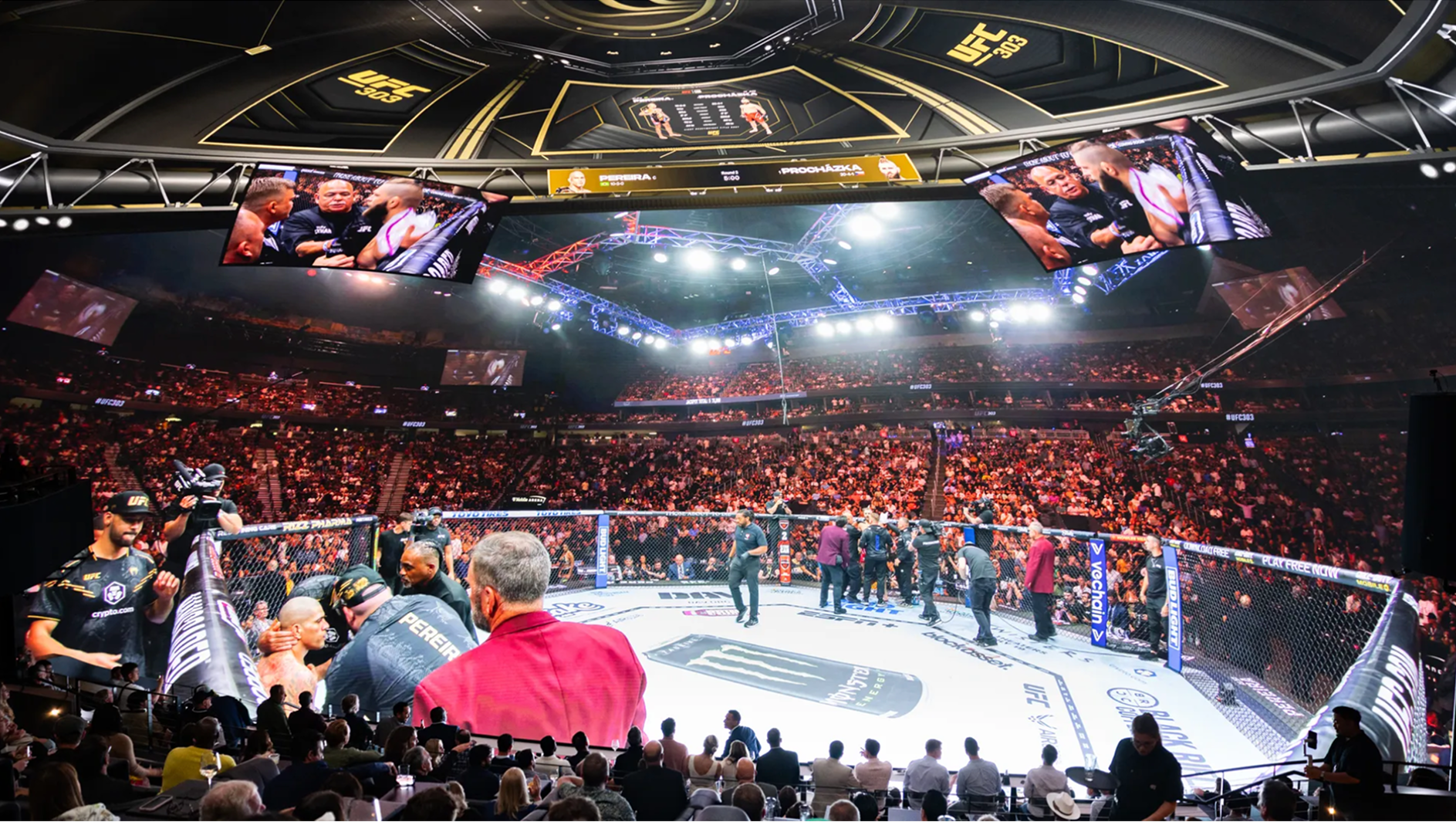
Cosm is a company formed by several teams uniting to reinvent how audiences experience content through Shared Reality. Think virtual reality - but shared experienced along side an audience. At the heart of this vision is the CX Display, a massive dome-like environment that immerses viewers, transforming the venue into anything imaginable.
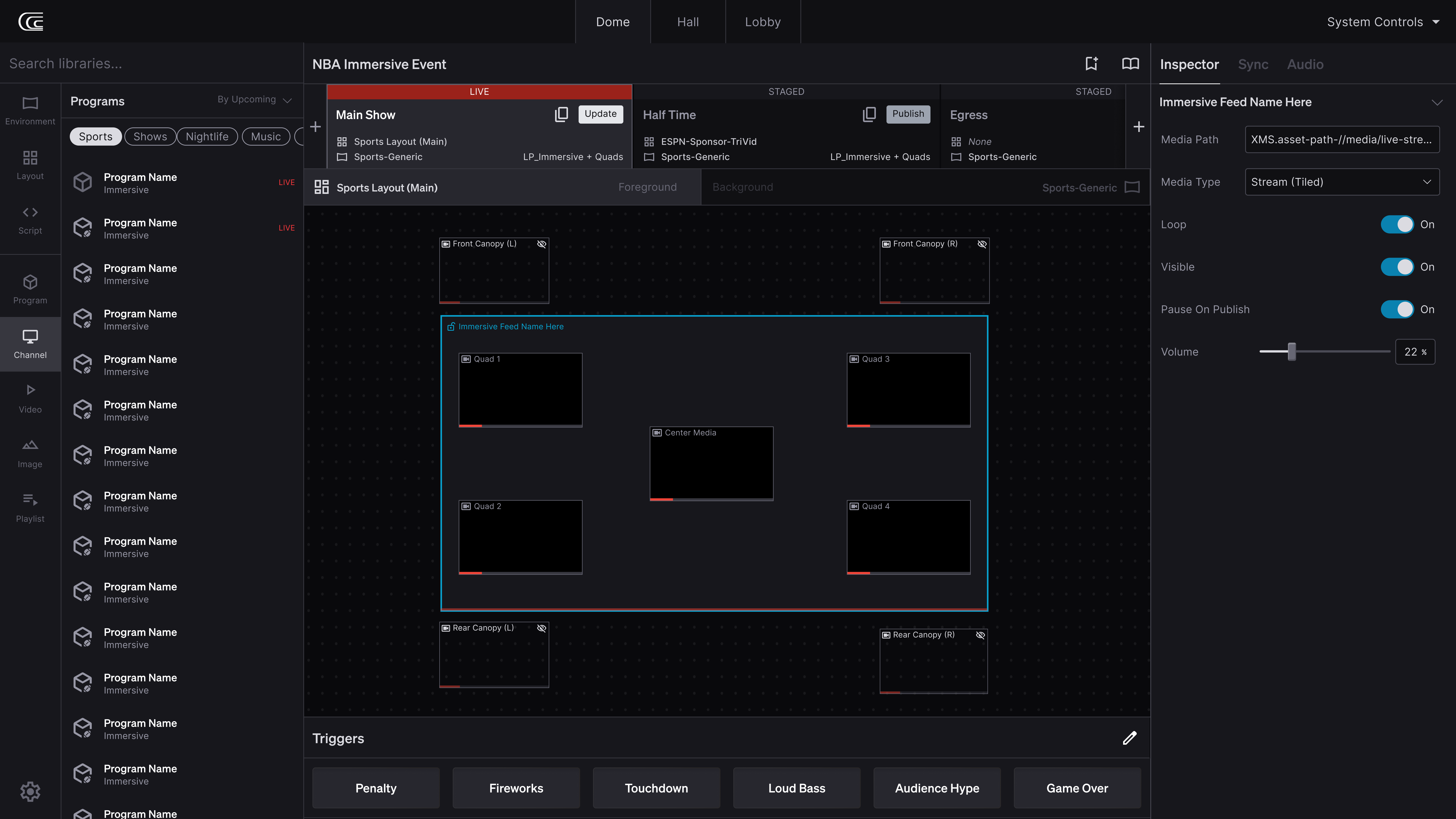
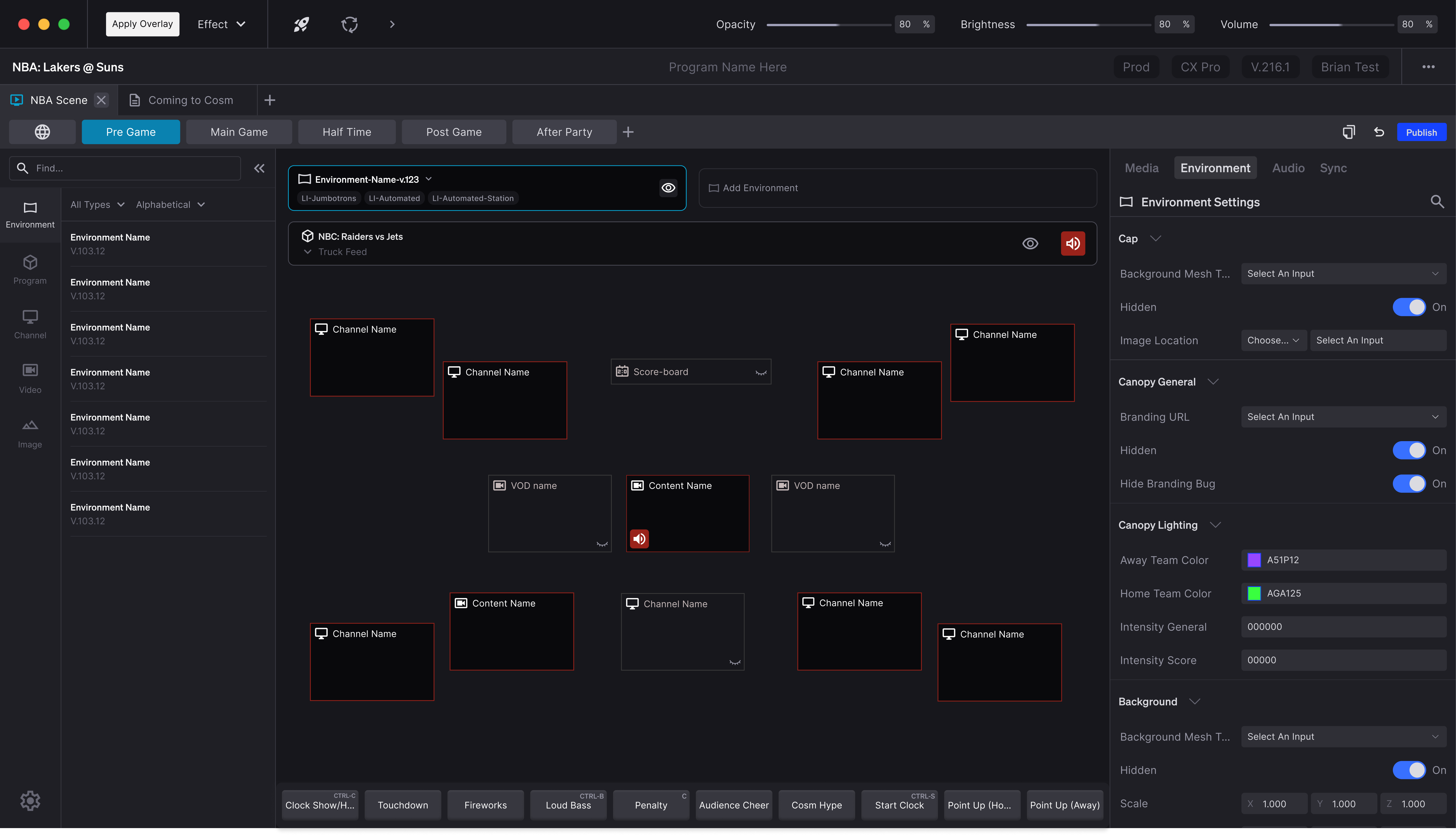
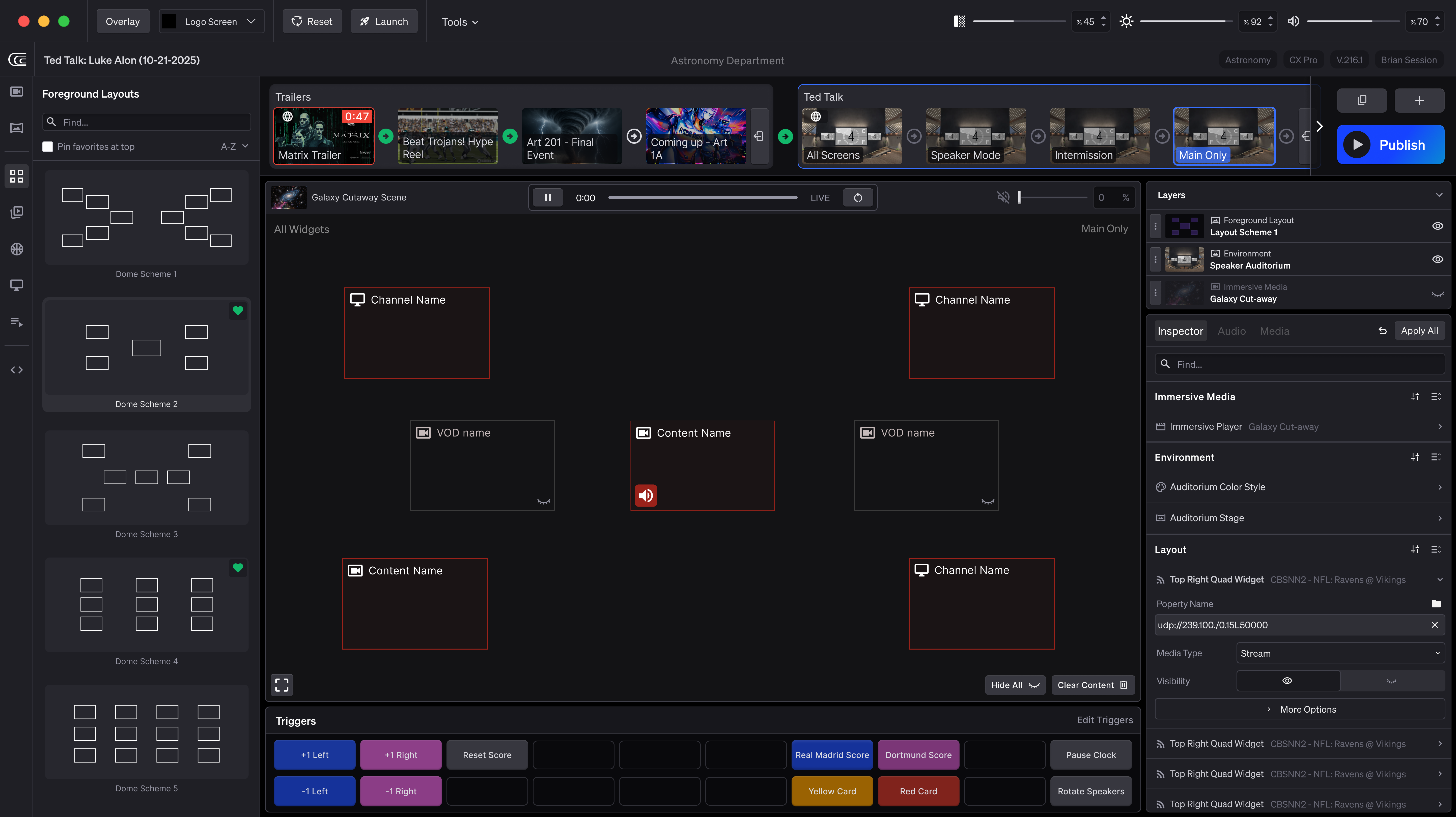
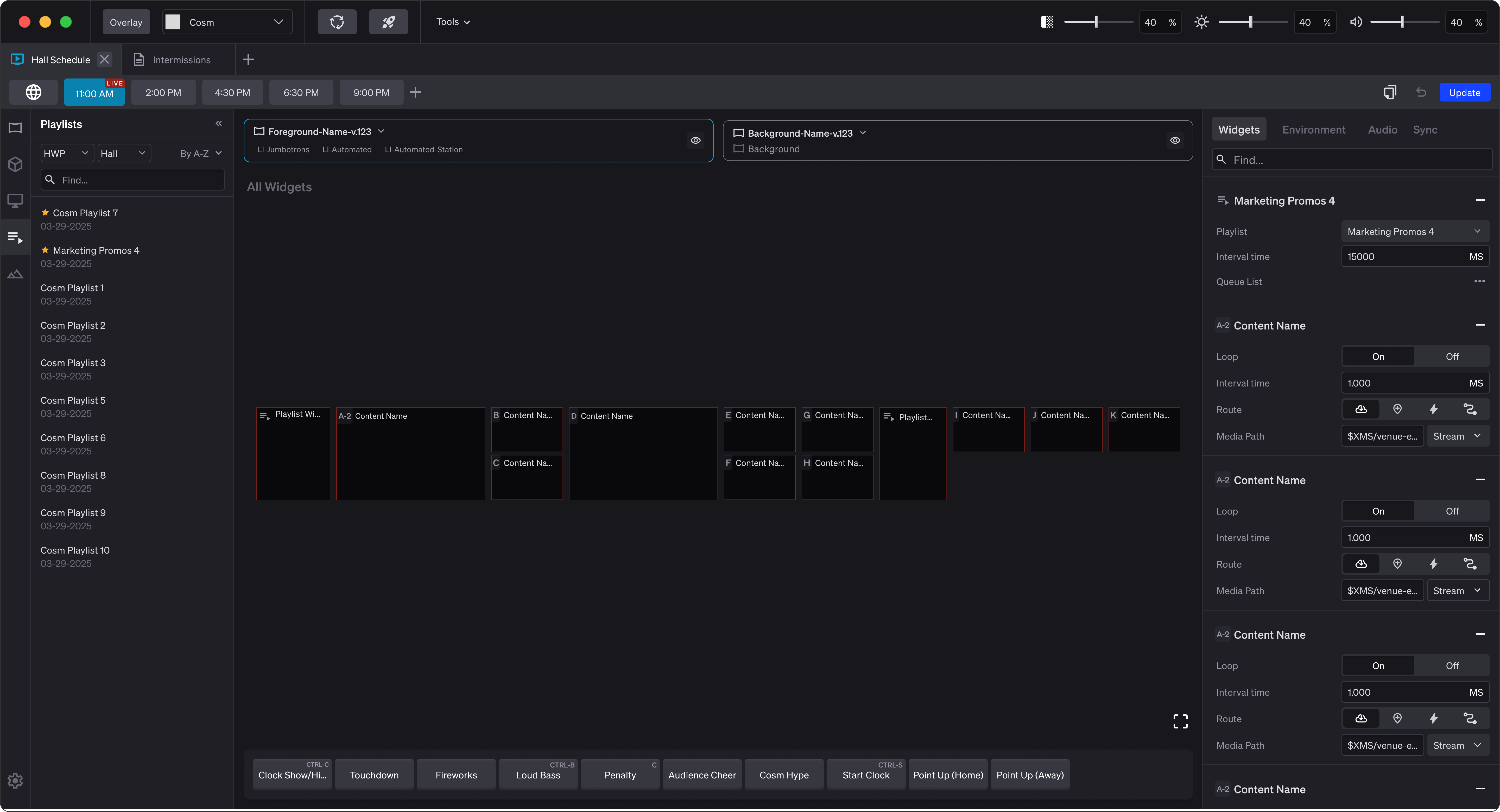
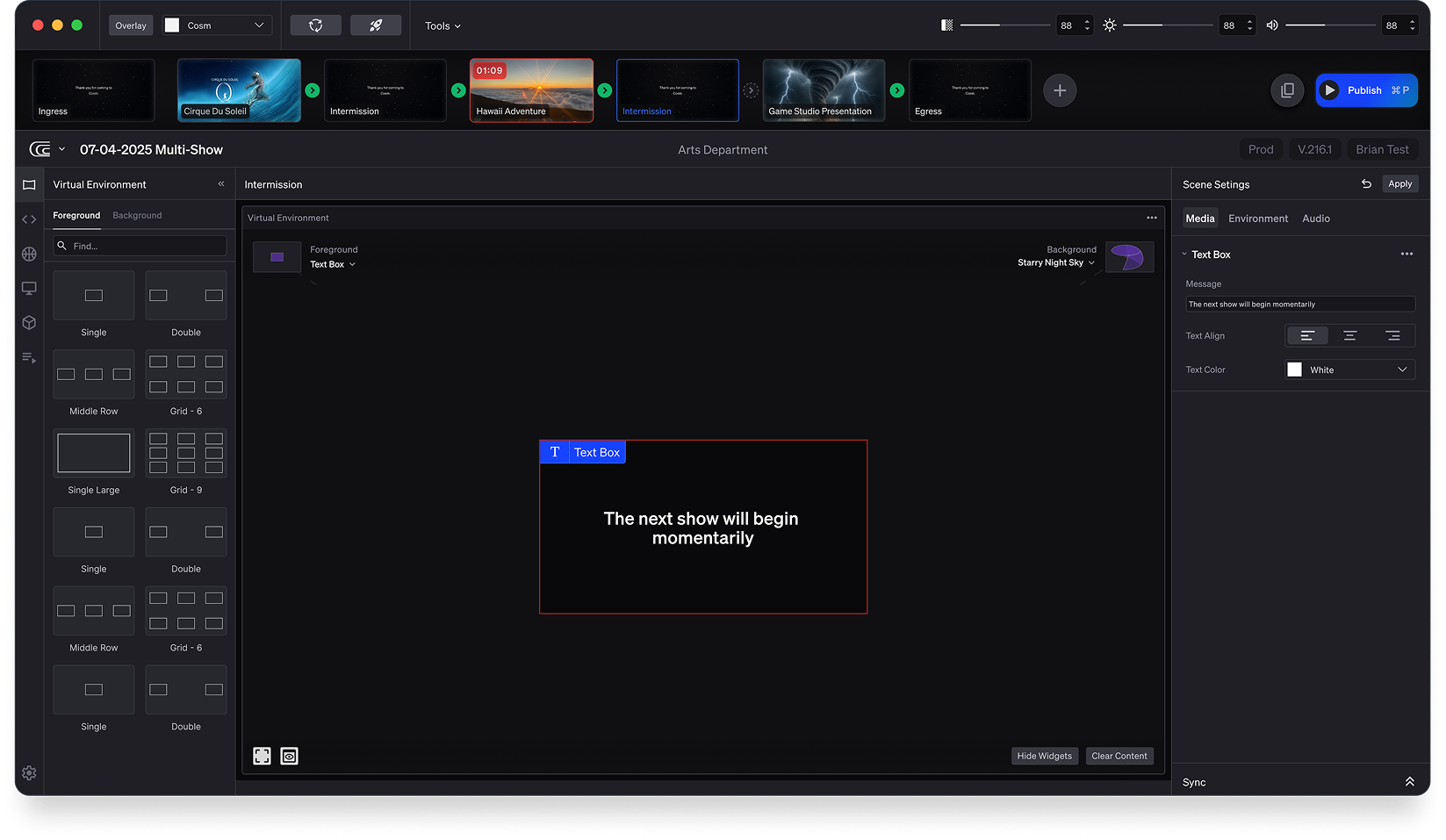
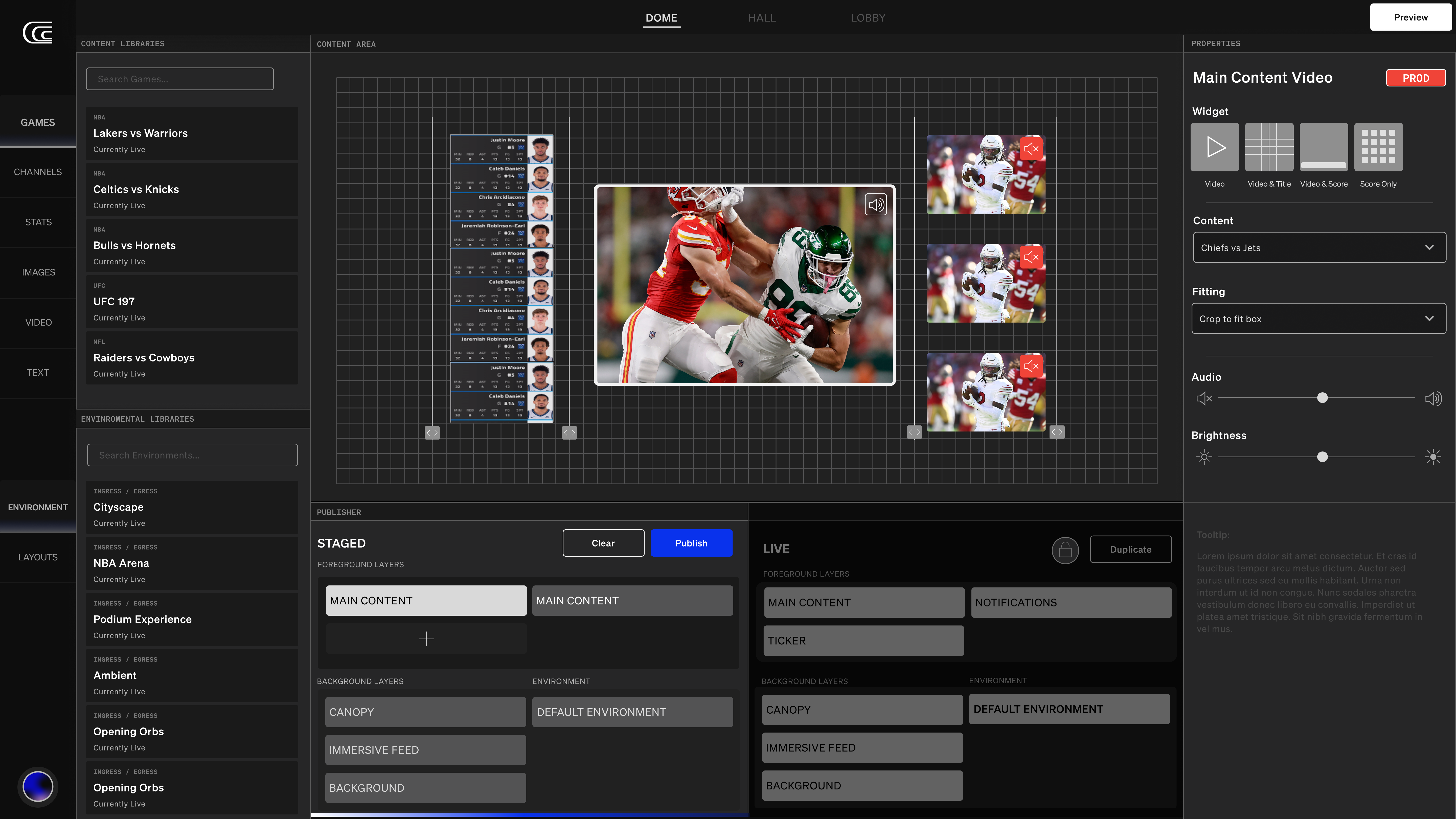
My role at Cosm was the sole designer of a 0 to 1 platform: CX Pro, a desktop application which controls the companies immersive experiences experiences across all venues. Below is an overview of how the controller changed in the last two years.
From 0 to 1
Leading the design initatives of an immersive entertainment controller from concept to reality
Given the tight development timeline, the MVP for CX Pro needed to be defined at least two months before opening—by June. This challenge was compounded by the fact that the venue’s actual run-of-show needs were still unknown, and the runtime engine’s required controls to support those schedules were not yet fully defined.
When I joined the team, Engineering was already deep into building the underlying features/systems that CX Pro would eventually control. With aggressive timelines, these systems were constantly in flux - both in scope and in behavior -as requirements shifted to meet delivery deadlines. The created a dynamic where design trailed engineering innovation.
To ensure this didn't snowball into an aimless direction, I worked with product stakeholders to focus on the most critical needs for CX Pro so that we had a unified vision of what CX Pro must be, while allowing flexibility for whatever new system requirement it needs to accommodate.
01
02
After the initial set of stakeholder review sessions, we gained alignment on primary use-cases and the fundamental nature for how the product should behave.
Version 1 CX Pro
MVP Candidate to lead Cosm into venue launch
9 Weeks out to venue launch, we had an agreed on MVP for CX Pro which mirrored the near-future of technical development. To make this happen, I leaned heavily into engineering meetings & scrum sessions to answer questions and get ahead of any pivots that needed to be made.
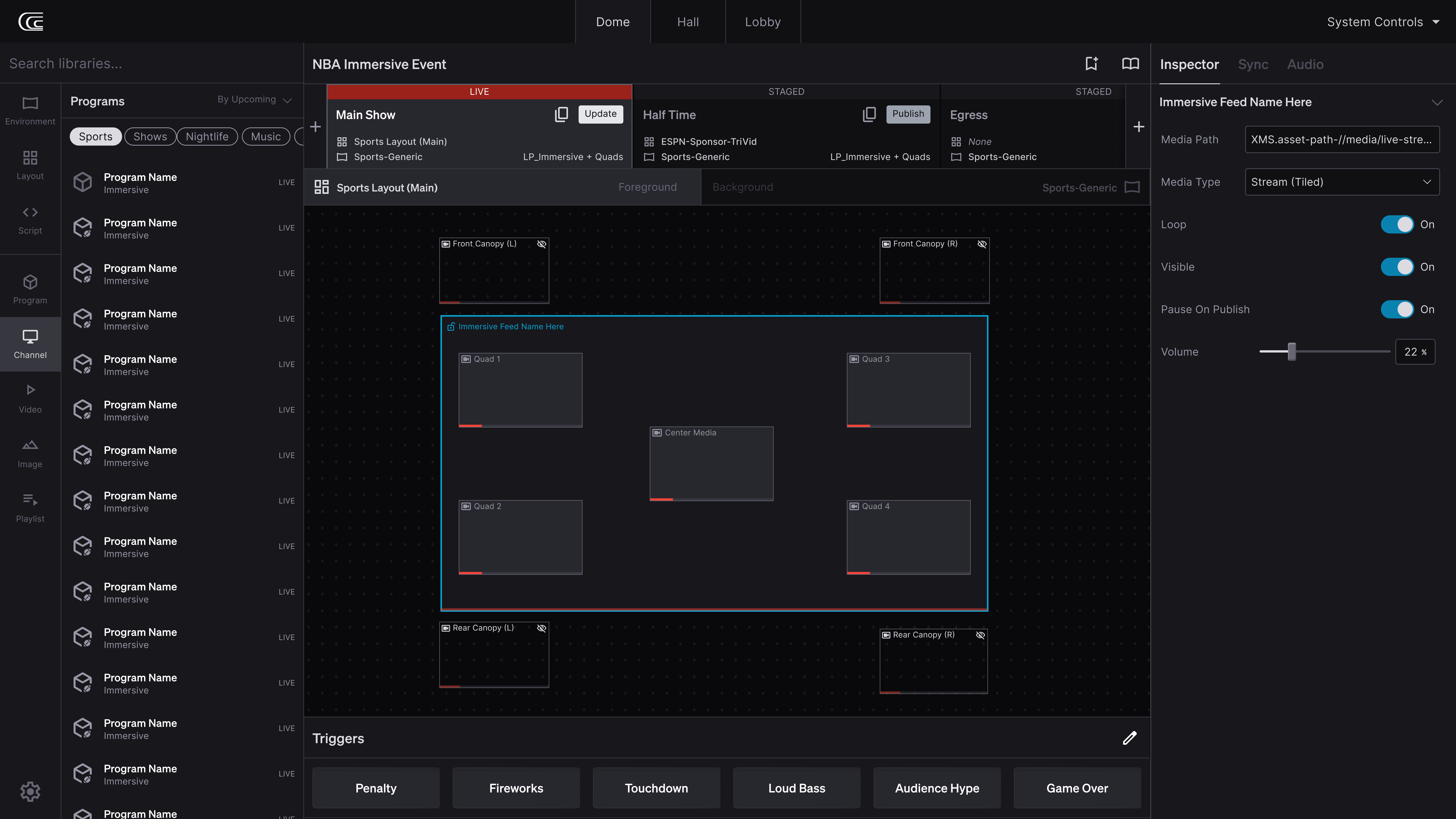
VENUE LAUNCH
Design
Post Launch Upgrades
Developing a product strategy to smooth out Run-of-Show oeprations.
After launch, our focus shifted to stabilizing the product and improving day-to-day workflows. Opening the venues dramatically expanded our user base, but we were primarily concerned with dome operators—the users running shows in real time. Because CX Pro had been built at warp speed, operators were dealing with bugs, system errors, and an unfamiliar workflow all at once.
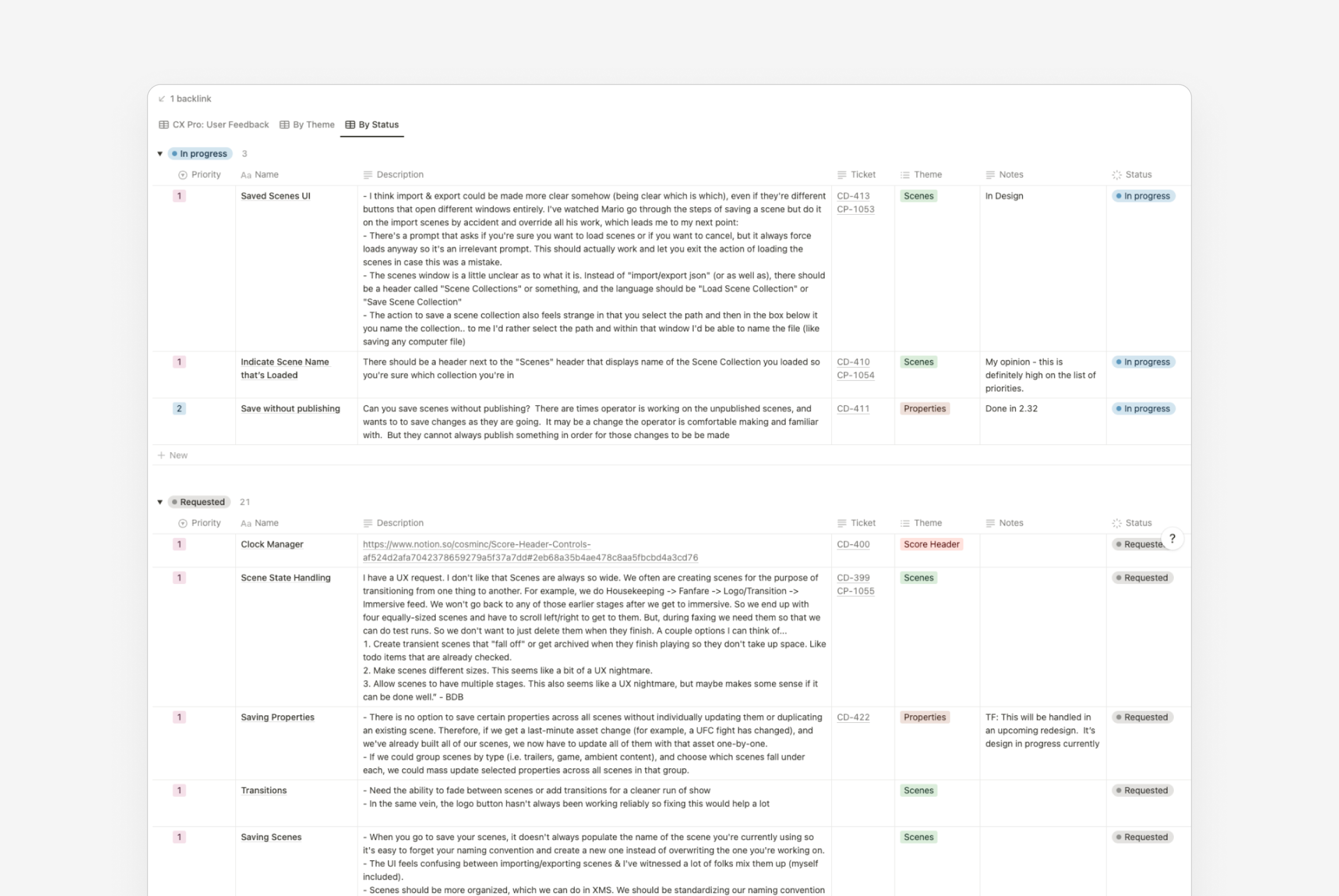
To address this, I leaned into operator shifts to note issues as they surfaced. Together, we built and continuously groomed a shared list of frustrations, which at product-side we translated into a prioritized set of design targets that dictated our post-launch iterations.
As users became more familiar with the tool, the reoccurring pain points became more obvious:
- Operators felt overly rushed to set up the next show in back to back schedules.
- Operators were constantly anxious of technical errors that might affect (many) scenes in front of a live audience.
- Operators were getting lost in their scenes as Cosm Run of Shows became more and more complex.
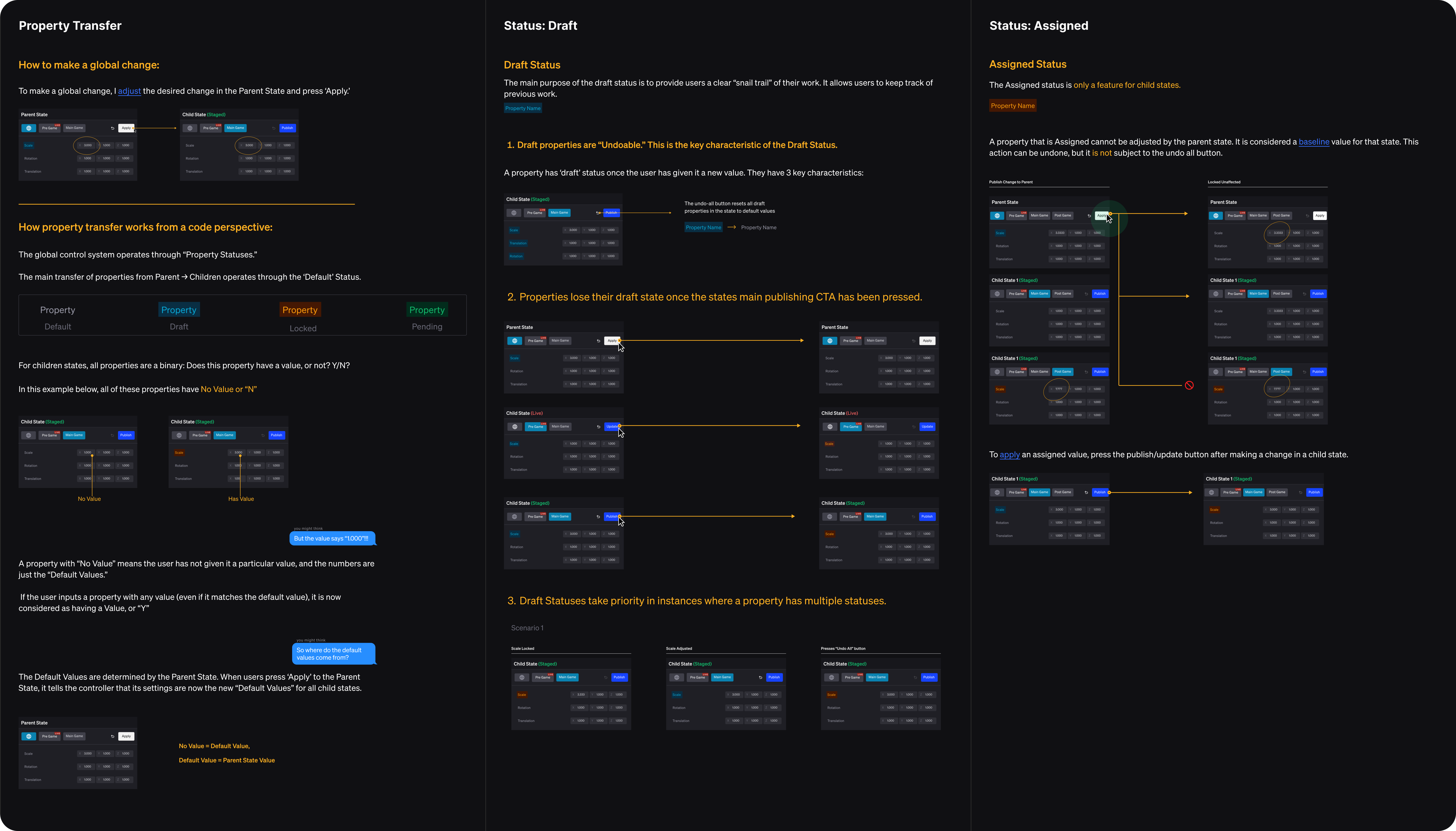
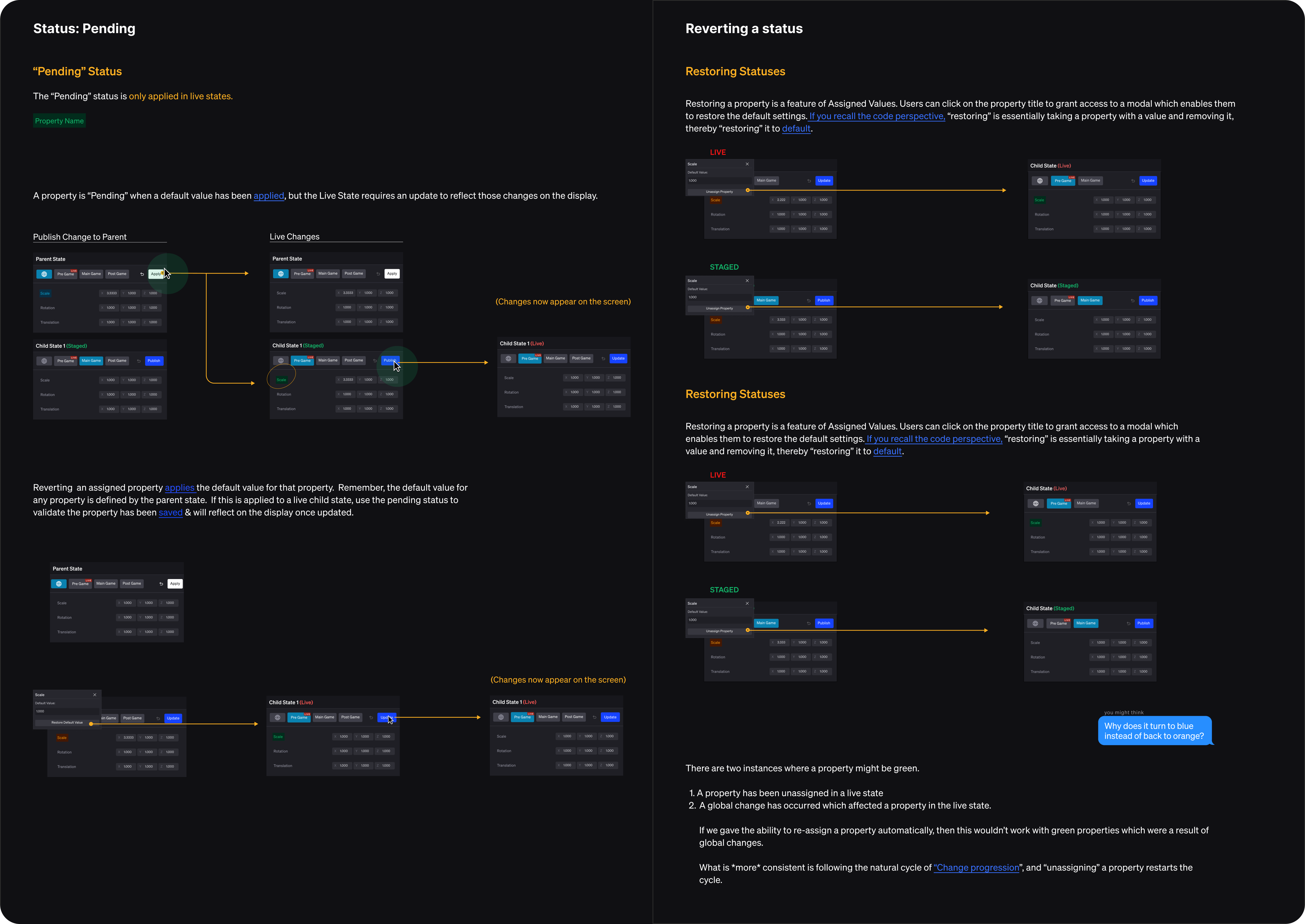
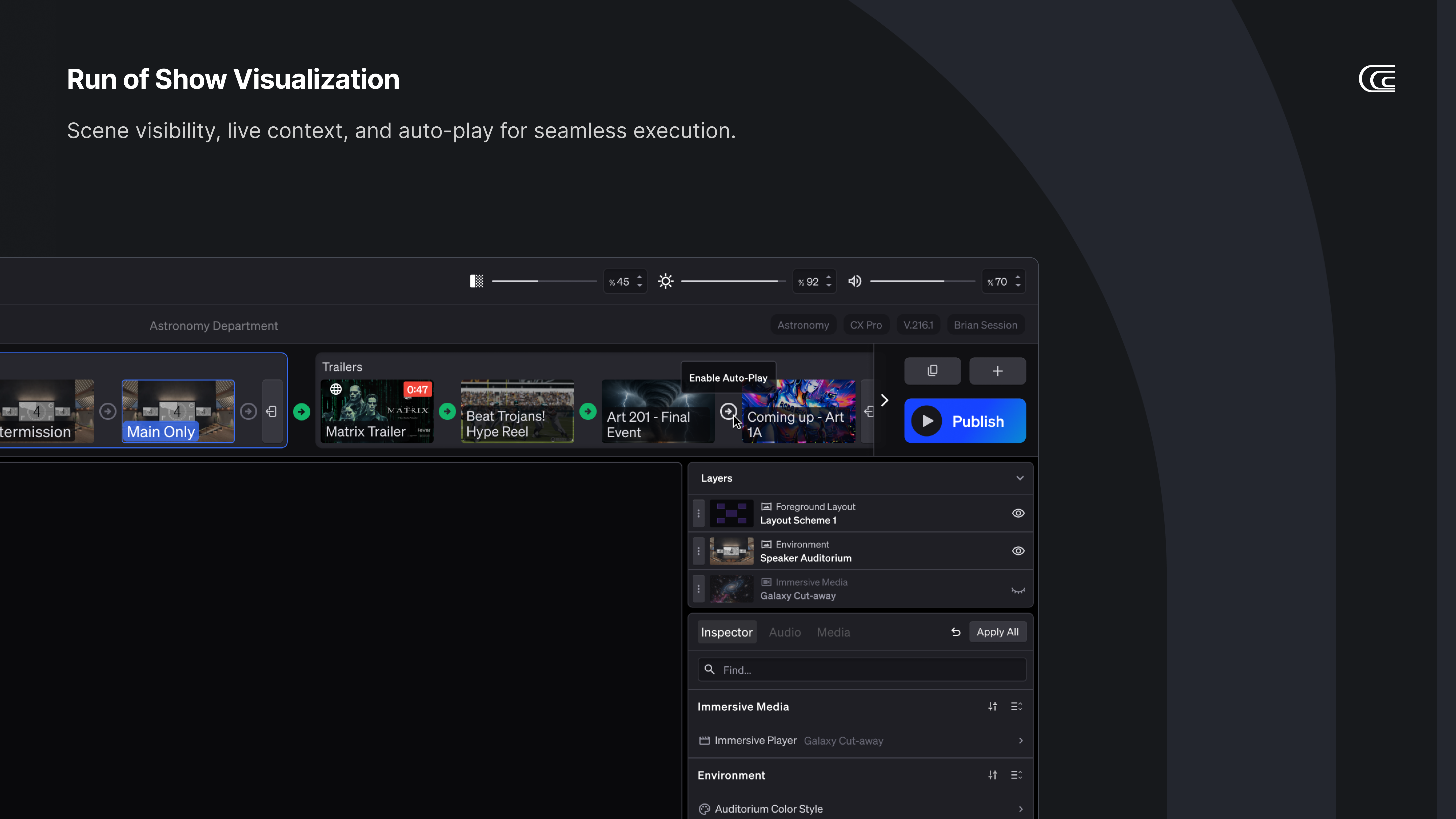
Another powerful feature that was shipped during the post launch phase was the parent control system. This system was birthed out of the need for operators to make sweeping changes to their show - as one bug could affect many scenes throughout the entire show which could cause a massive detriment to the audience experience. I crafted a system which gave scenes "states" - with one state being a "parent" and the following states being "children."
What this system did was create a control structure to allow operators to make broad sweeping changes from the parent, while still having minute control of the children states.
The difficulty with a system like this is clarity. So, I created a visual high-light system to indicate the status of properties as changes transferred, and created a help-document for stakeholders & operators to use as a reference.
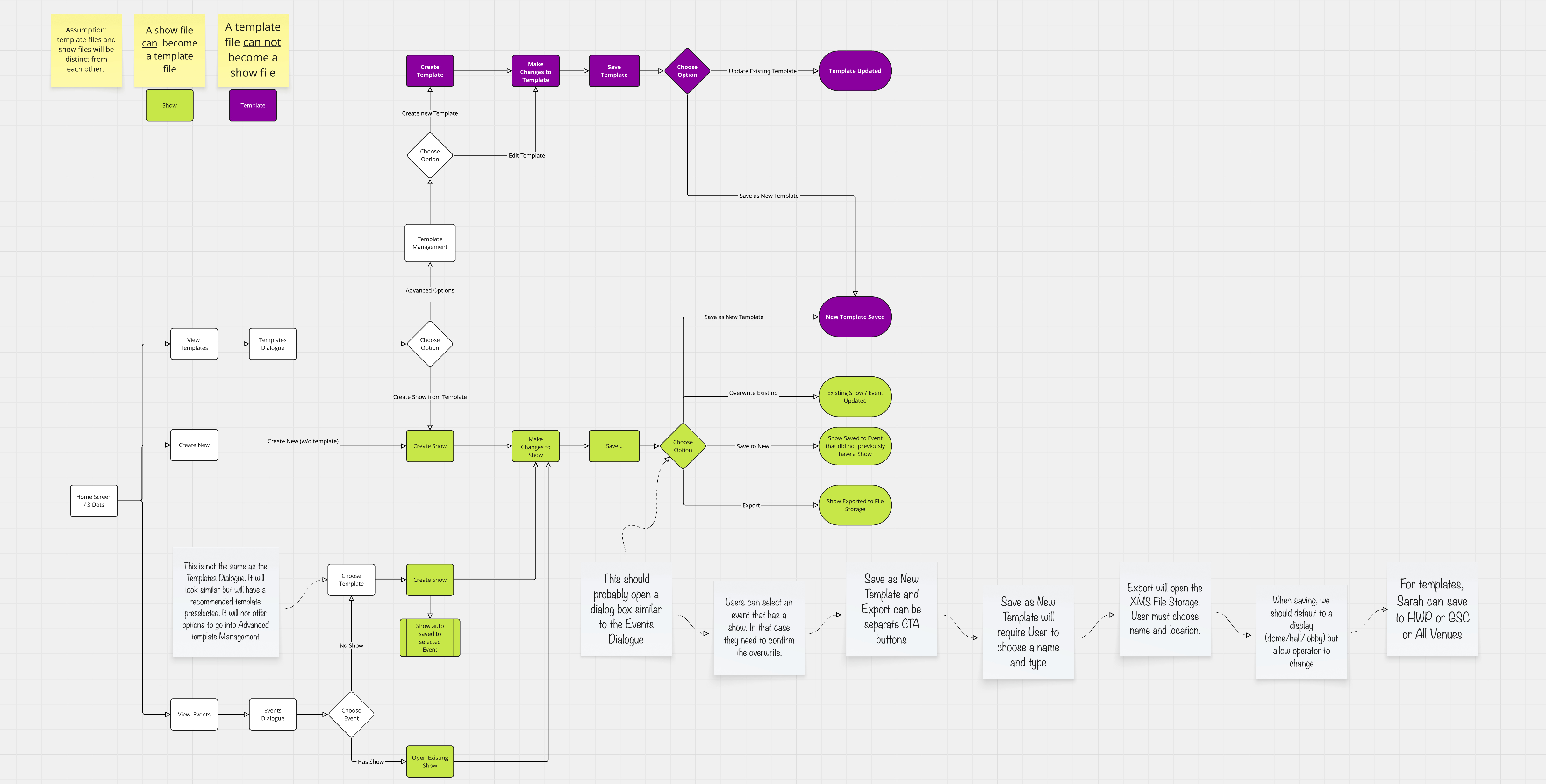
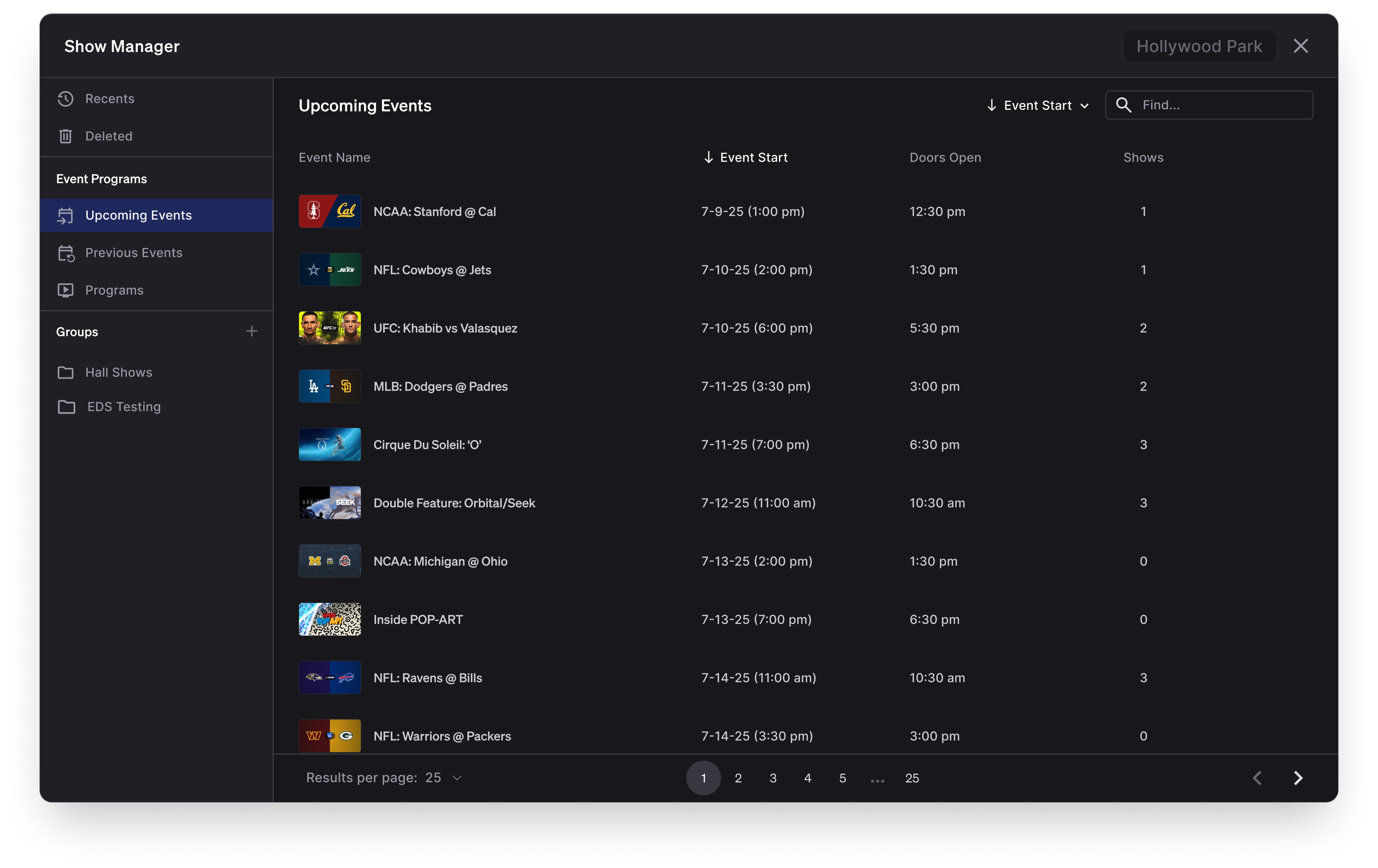
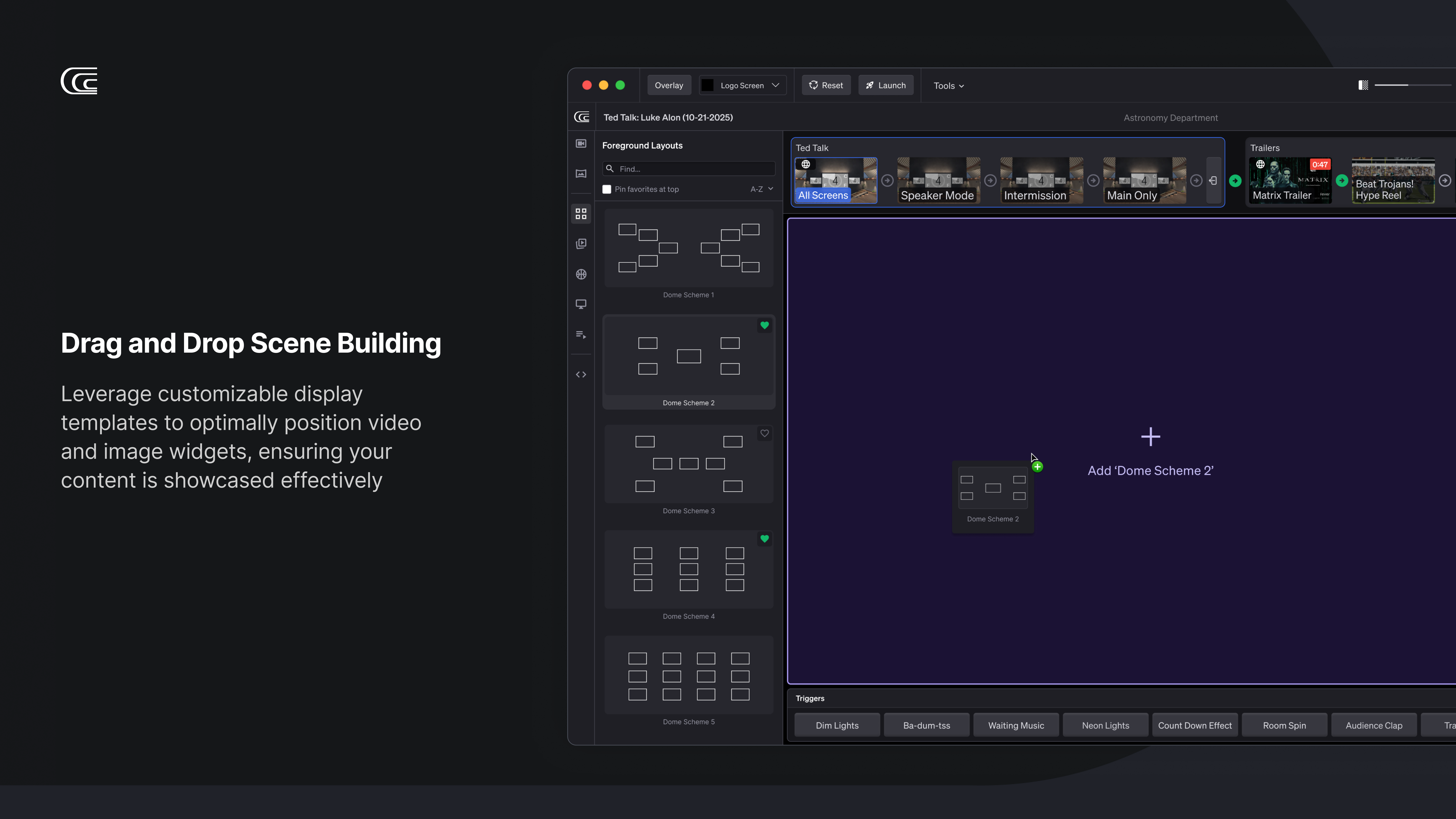
Show management came with significant overhead: long file paths, frequent backups, and a workflow that was difficult to move through quickly. The most critical moments in an operator’s shift are the transitions between events. Schedules are often back-to-back, giving operators only minutes to set up the next show. And because live sporting events are constantly in flux, the assets needed to build a show often aren’t available until shortly before the event begins.We identified that streamlining the show-creation process would have the highest impact—reducing setup time, increasing reliability, and ultimately enabling venues to support truly back-to-back events.
Version 2.0
2 Quarters: 4+ high impact features delivered + refined & expanded design library
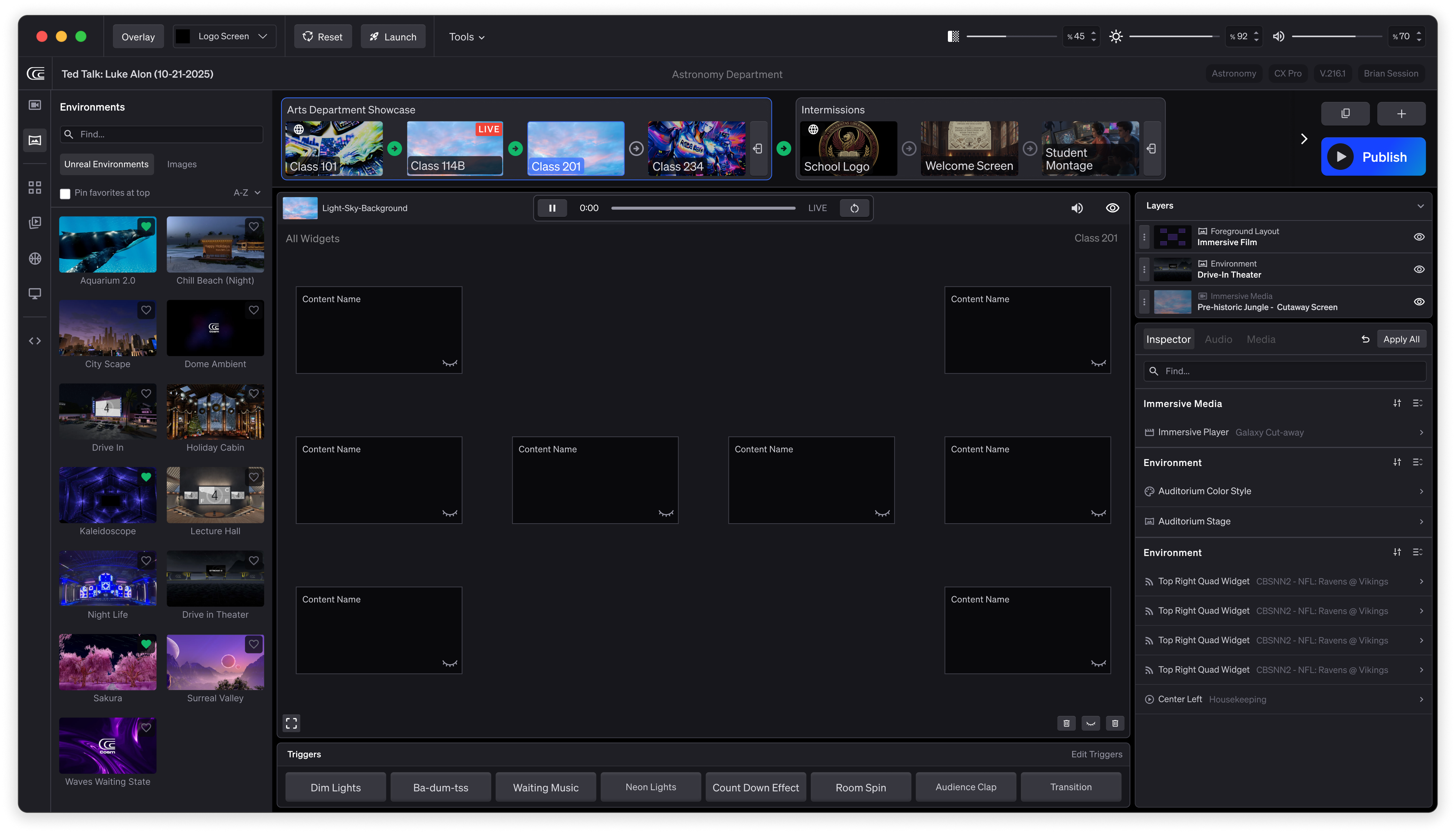
With the delivery of these new features, users saw a massive boost to workflow speeds. More importantly, our users felt more safe/confident running shows with the added power boost that global controls grants.
"I feel like I can really set up my scenes in a way that makes more sense to me because I know the parent state is there to save me if an error happens"
- Mario R. - Dome Operator

Impact
Version 2.0 Results
Slashed training time & event set-up clicks resulted in new operators running shows within the first week.
Fortunately for us, version 2.0 released in around the time of a hiring spurt for new dome operators. This allowed us to compare how training progressed with new hires in version 2.0 opposed to the last training session with version 1.0. The differences in new users going through the learning curve were clear:
Operators running shows
First Week
Event Setup Time
5 Minutes
40 Min
Operator Training Time
2 Weeks
6 Weeks
With CX Pro running in a smooth state, it was time for us to set our eyes on external B2B launch. Our sales team had informed us that our likely primary audience will be universities with a diverse set of users.
Until now, the majority of our users were power-users. Now, we need to make this tool easily digestible for the occasional/rare-user type.
Discovery
User Research
Slashed training time & event set-up clicks resulted in new operators running shows within the first week.
To prepare for external B2B launch, we needed to take a deeper look at all of the intricacies operators deal with so that we can make those intricacies intuitive for new users.
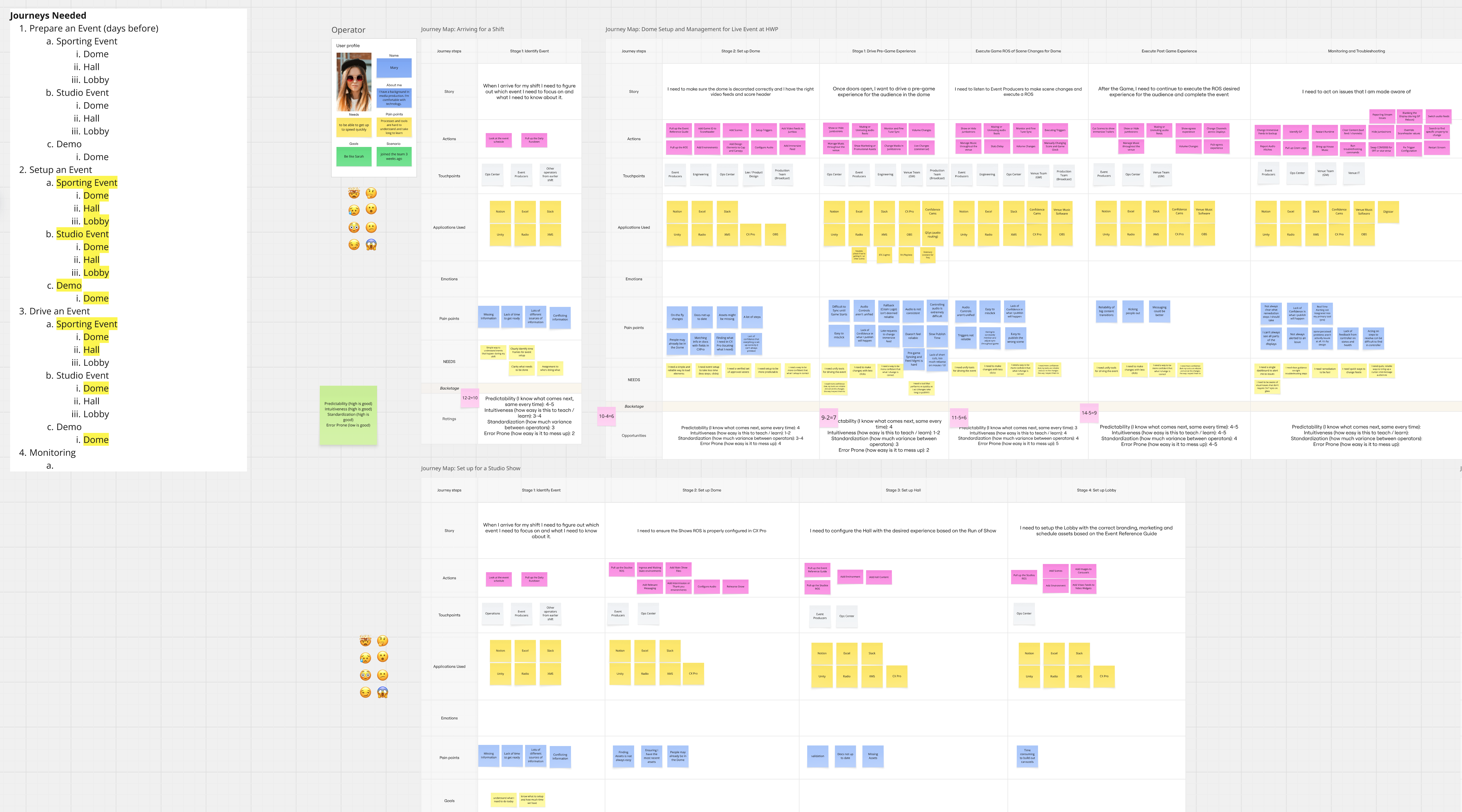
By this time, we had a much stronger sense of what real-world use cases tend to look like & the frustrations operators have. So, we created journey maps for these use cases that gave us a high level view of users process, frustrations, needs, and more.
From this, we were able to ascertain which usability hurdles to tackle first. Additionally, it served as an excellent starting point for determining necessary new tools to incoporate into CX Pro such that other tools are not needed.
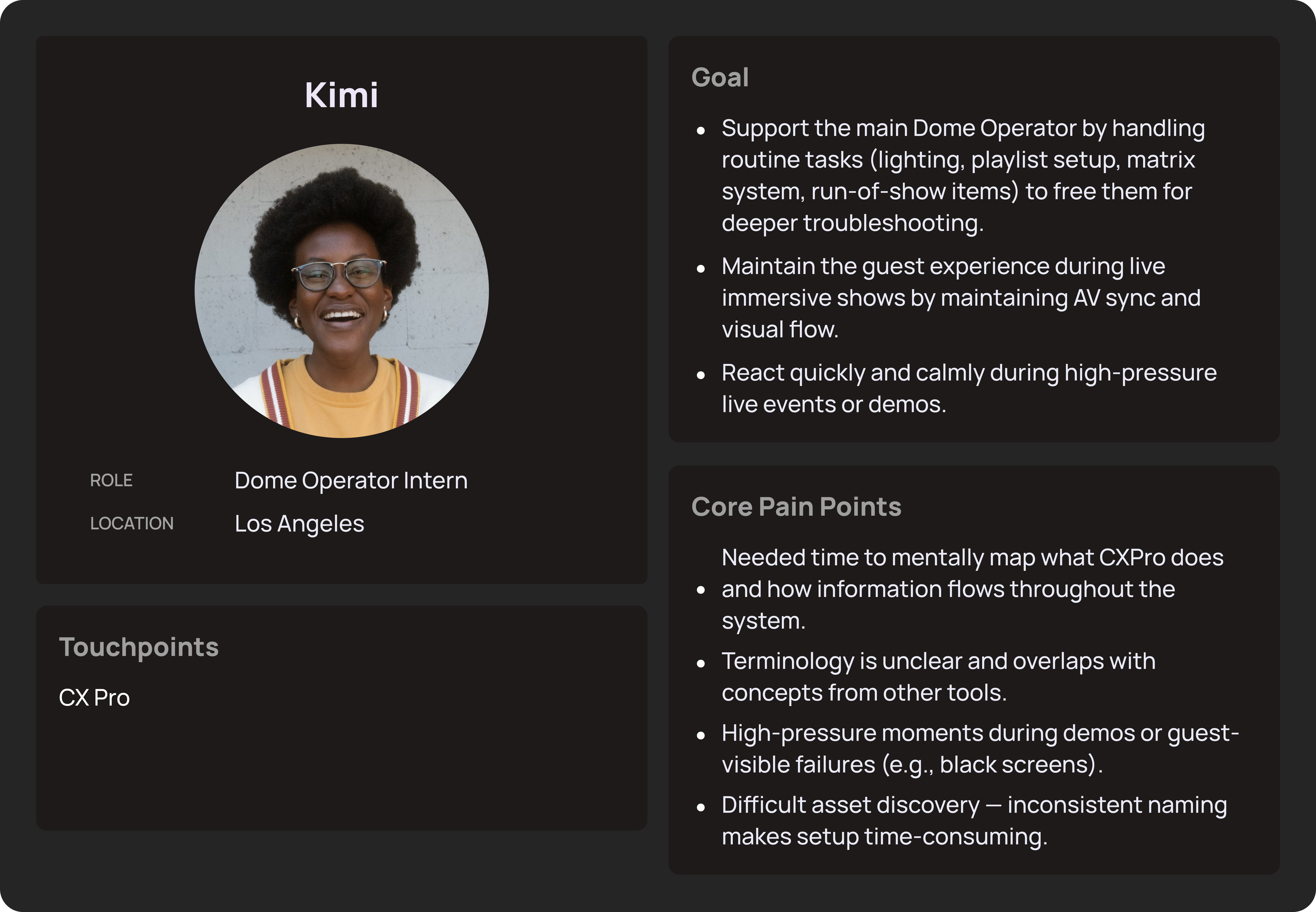
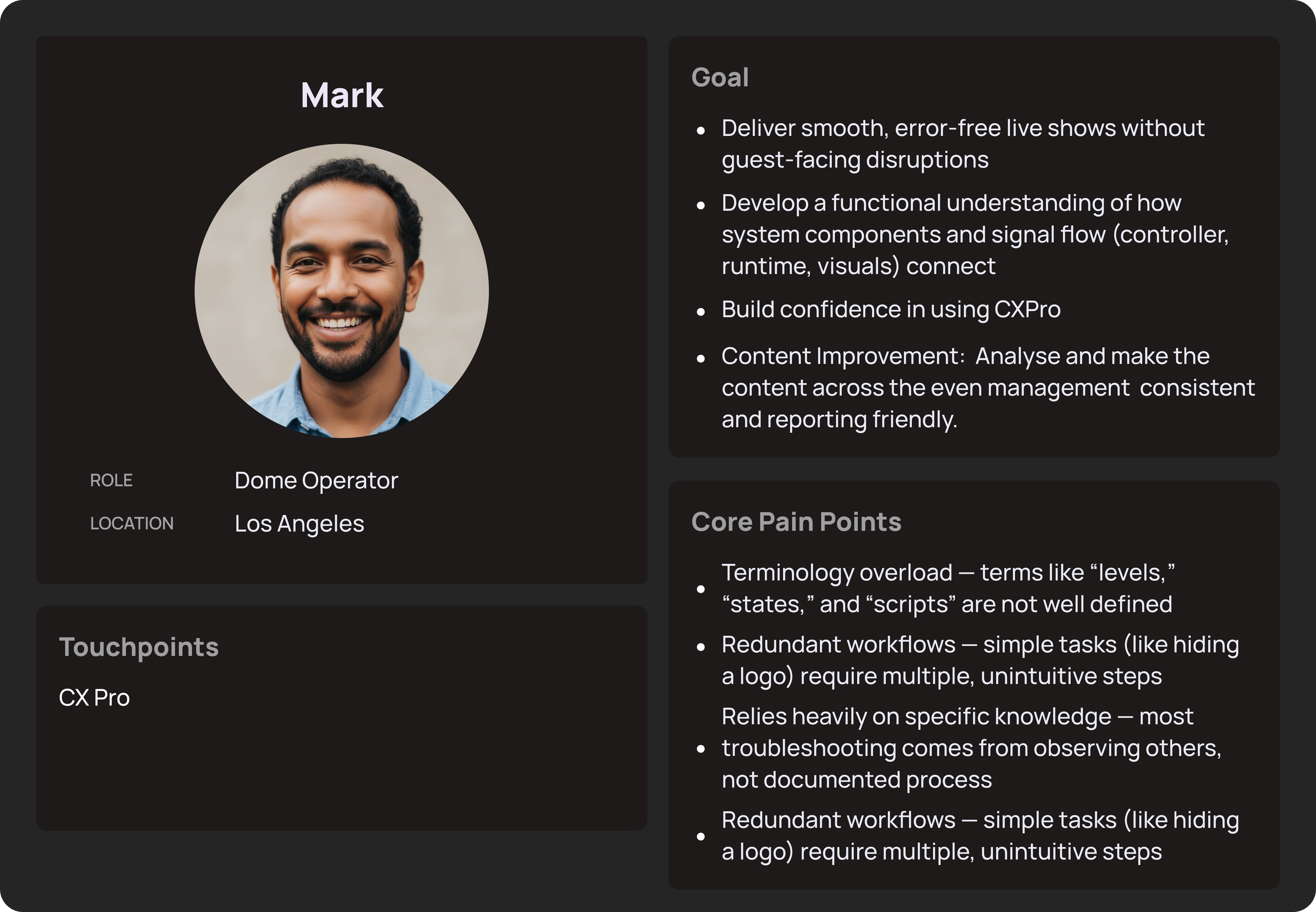
Once again we were in a scenario where we had to design for users that did not exist. We knew that university students and professors would likely be our first external users, with a wide variety of use cases. So, our strategy was to leverage our new operator hires - those with the least amount of CX Pro experience. Fortunately, we had two brand new operators that had just came off their training. I conducted user interviews with these new hires and developed a persona board to examine similarities. From these, we found that in order to prepare for large-scale spike of new users, we must conceptually simplify our system.
Designing For B2B
Created a North Star for CX Pro and scaled back to deliver on early 2026 goal
As CX Pro was operating in a smooth state, we had the advantage to explore concepts. What would CX Pro ideally look like for that university professor who just wants to show their work?
With this time, I decided to "go crazy" exploring different ways CX Pro could preform its functions. While the concept below was just a thought experiment, there were valuable lessons in it.
After showing these concepts to operators, we were met with immediate excitement. This is what they wanted: an explicit Run-of-show tool.
We could extrapolate from that that CX Pro is simply doing too much things at once. What if instead of having a tool that builds & run shows simultaneously, we had a tool which did one at a time - each with their own specific view?

Version 3.0
B2B External Launch MVP Candidate
We aligned on a direction that balanced development feasibility with meaningful innovation. I focused on evolving existing features in ways that improved immediate usability while intentionally moving CX Pro toward a future run-of-show–focused experience. With this direction defined, we returned to the sales team with a clear product vision, one that expanded CX Pro’s appeal to a broader range of potential clients.
Projected Impact
Given CX Pro’s strong usability performance in Cosm venues, leadership chose to replace Digistar—a 40-year legacy tool—with CX Pro as the primary operating software for external clients. Because CX Pro was built from a user-centric foundation, the Sales team can now position it as a key differentiator: a modern live-production platform capable of supporting any show or broadcast schedule, from simple to highly complex.
Over the next 5 years
$X-XX Million in Revenue


Relume was started by two guys with the same mission.
Our story starts 8 years ago... Strap in.


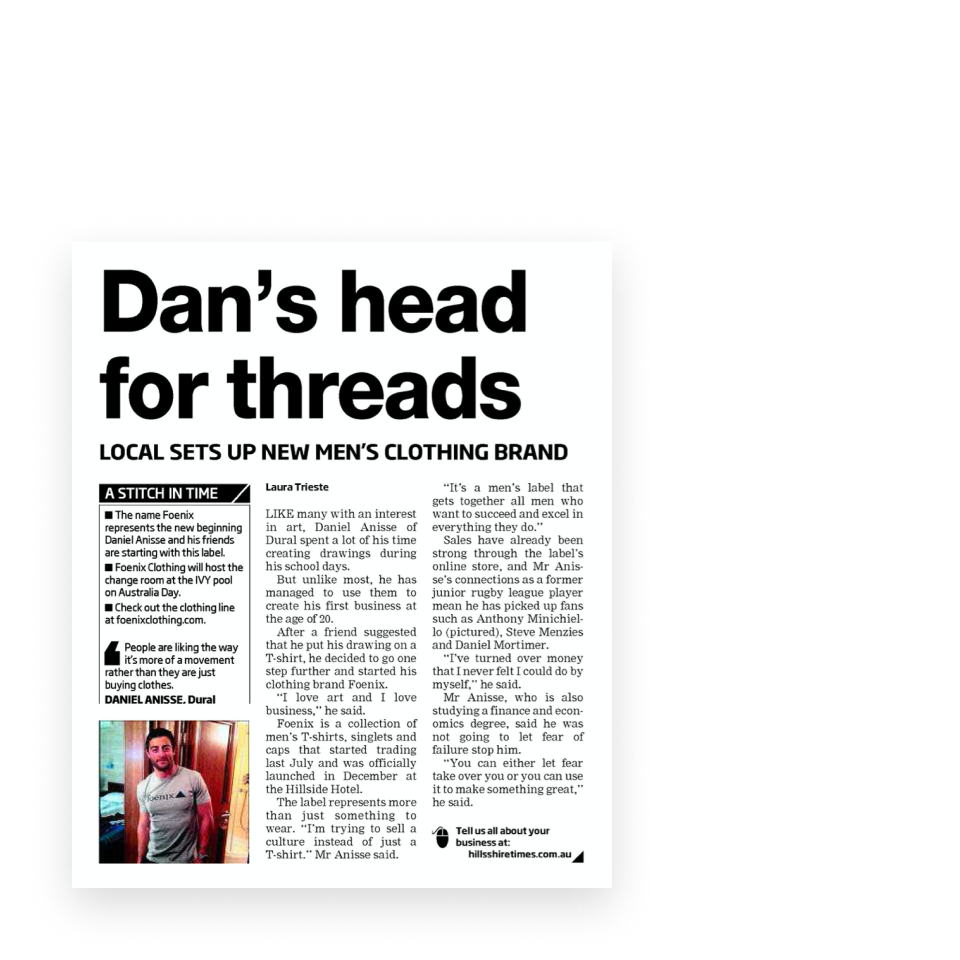
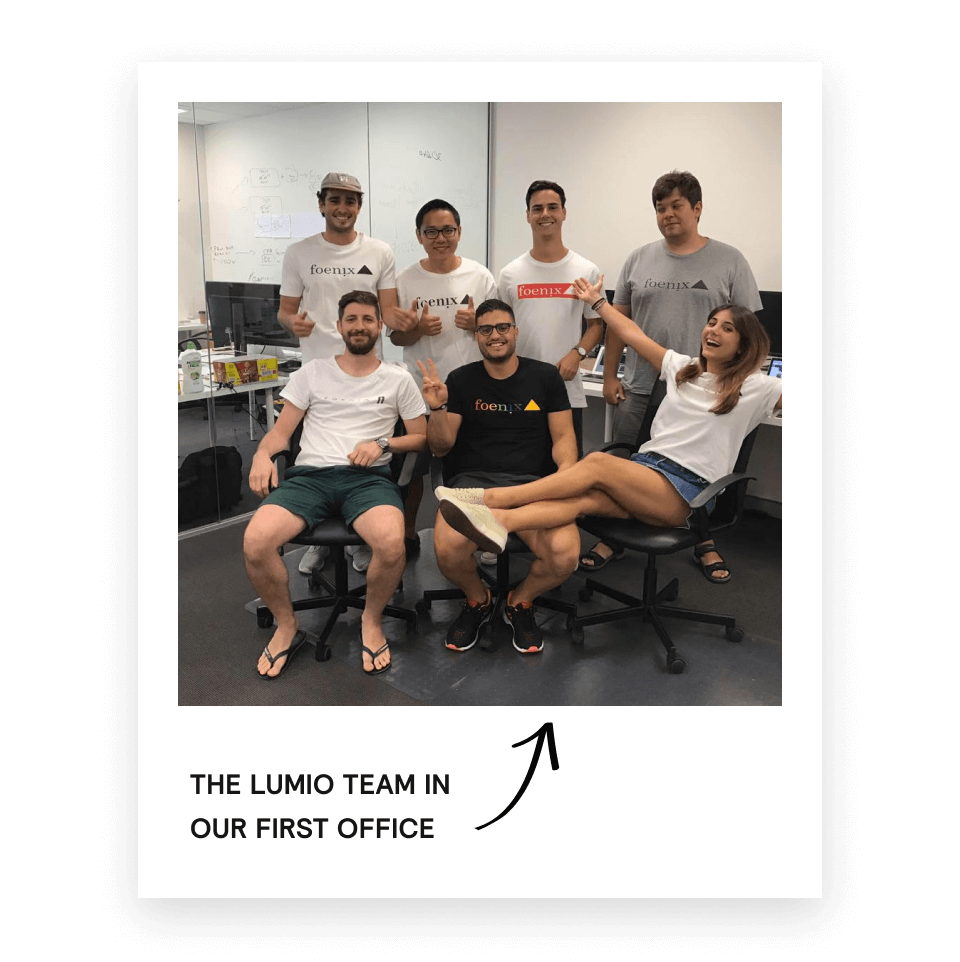
Lumio, previously called Foenix, was a social media analytics company that helped brands like Audi, David Jones and Red Balloon source legitimate influencers for social media campaigns.


“We were essentially the Instagram police and called out fake influencers left, right and centre. It was fun and all, but there is only so many bikini chicks you can look at on Instagram before you start losing your mind.”
Dan, Co-founder and CEO of Lumio


“After this, we both took up golf during the week and started eating fancy dinners at the local Country Club... Ha. This is not what happened at all. We suck at golf and love eating Guzman Y Gomez.”
Adam, Co-founder of Lumio
Whilst in Germany, Dan worked with with brands such as Daniel Wellington and BMW - Ja!
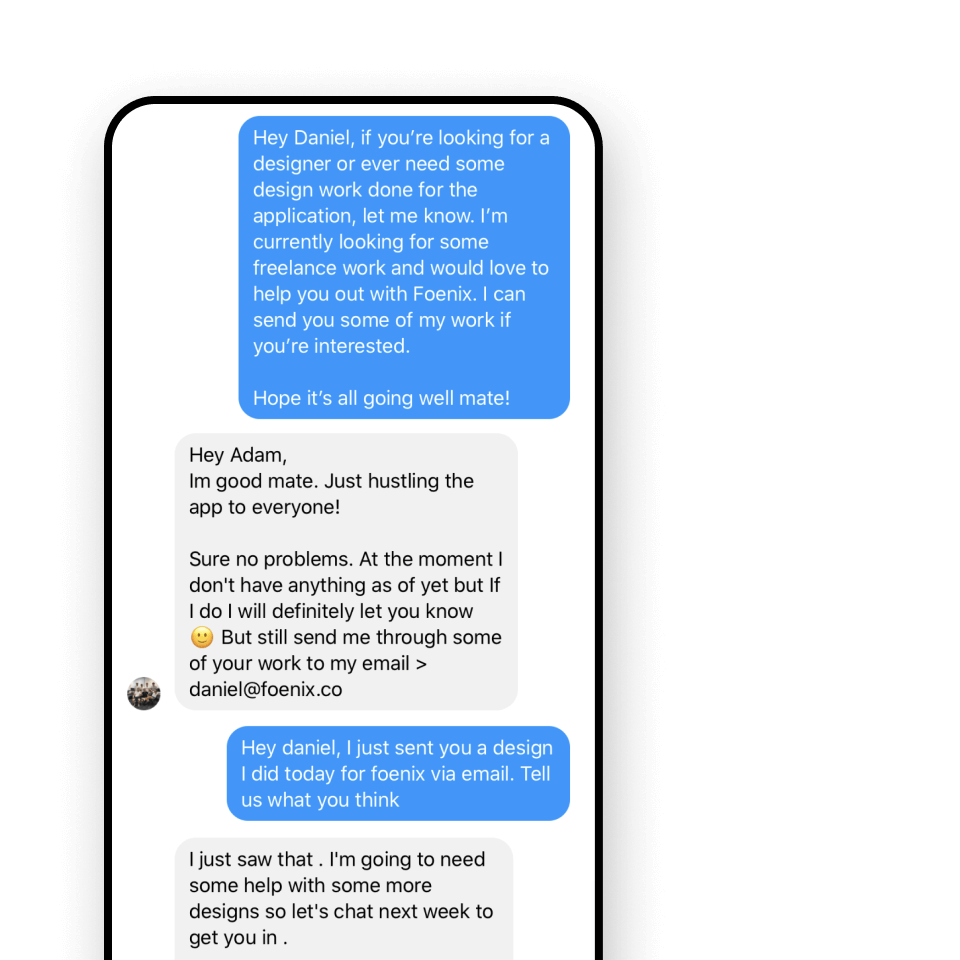
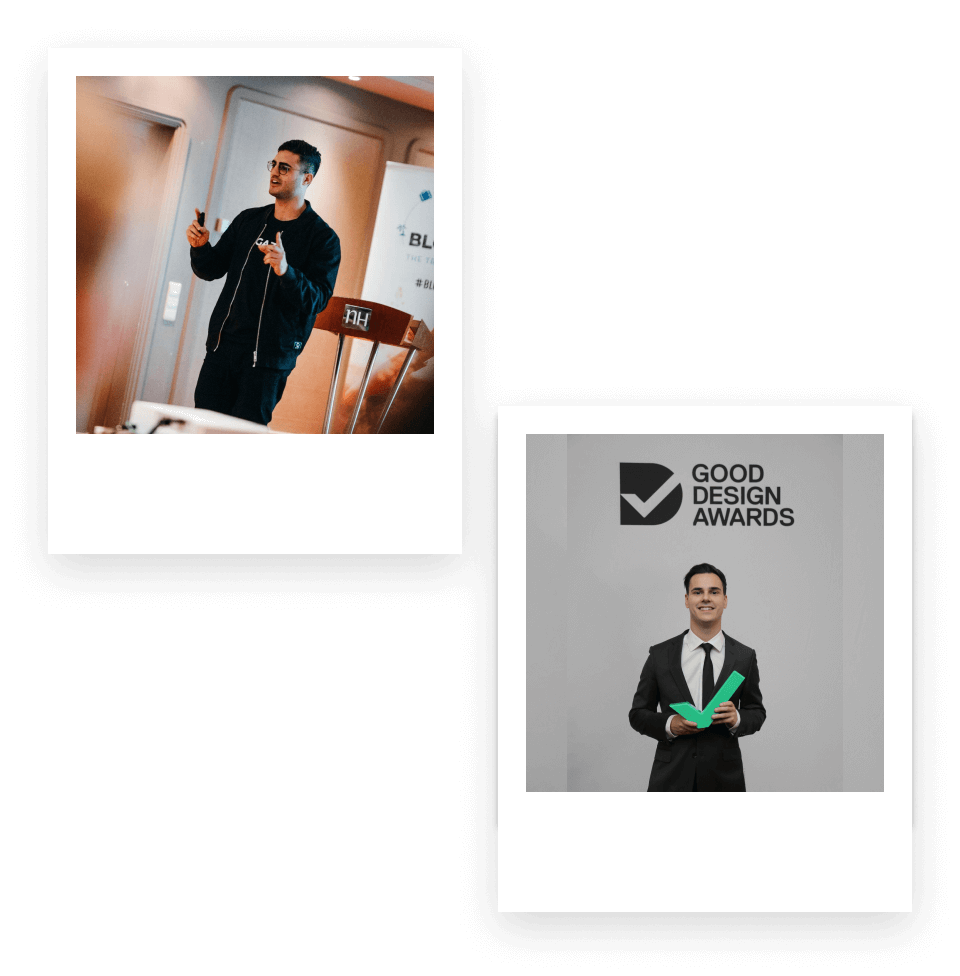
Adam worked with clients like Vodafone, TAFE NSW, Adobe and also won the 'Good Design Australia' award for his work on the Seatfrog website.

The name "Relume" is born.
relume
[ri-loom]
To relight or rekindle (a light, flame, etc.)


To do this they would have to build a company that would be profitable in its first year. Not the next Uber of *insert clever idea*.


“Relume was an opportunity for us to build a profitable business, not a startup that bleeds cash, whilst doing what we love to do. It also allows us to learn about all types of businesses and the problems they deal with. These are all opportunities that we could potentially solve for in the future. For now, our goal is simple, we want to build a kickass business which means we really want our customers and the Webflow community to succeed too.”
Dan, Co-founder of Relume
You've heard our story, it's now time for the world to hear yours.